

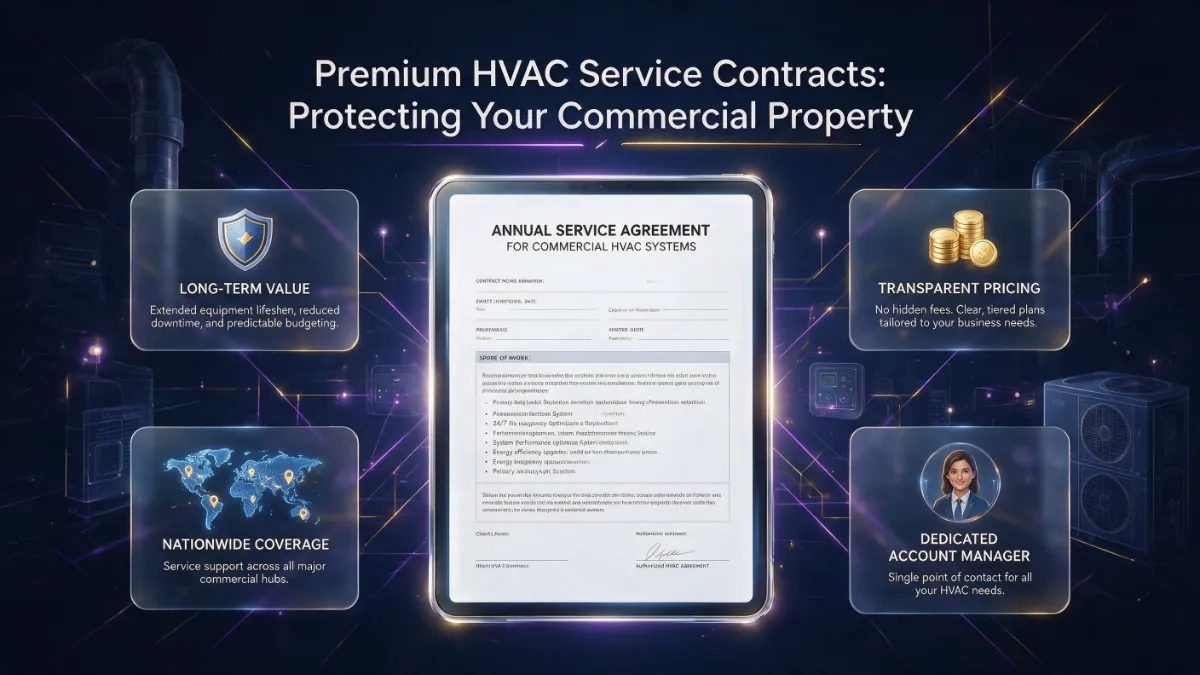
If you are relying purely on emergency repairs and summer heatwaves to keep your trucks on the road, you are living on the ultimate business roller-coaster. The secret to predictable, year-round revenue is locking your customers into a solid HVAC preventive maintenance agreement.
A well-structured service contract does more than just guarantee two visits a year; it creates loyal customers who will never call your competitors, even when their system completely fails. However, many owners struggle to write contracts that protect their business while remaining attractive to the homeowner.
Here is exactly how to structure your maintenance contracts, avoid legal gray areas, and automate your pitch to boost your bottom line.
Key Takeaways
- An HVAC preventive maintenance agreement stabilizes cash flow during slow shoulder seasons (spring and fall).
- Your contract must clearly define exclusions (what is not covered) to prevent costly free repairs.
- Priority service guarantees are the number one selling point for residential homeowners.
- You can eliminate the administrative headache of writing and selling these contracts by using AI prompt workflows.
Table of Contents
Why Your Business Needs a Service Contract
Most small service businesses treat maintenance as an afterthought. It shouldn’t be. When a customer signs an HVAC preventive maintenance agreement, they are effectively putting your business on retainer.
Breaking the “Repair-Only” Cycle
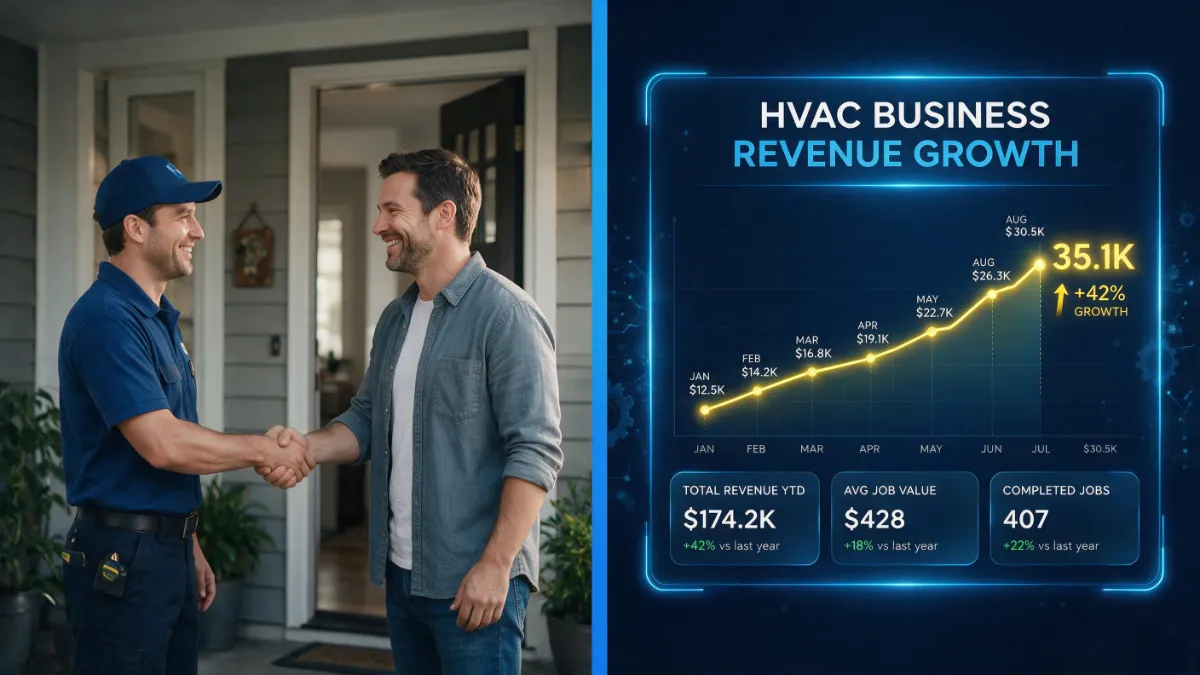
When you only operate break-fix calls, your customer acquisition cost (CAC) eats into your profits on every single job. Maintenance agreements flip this dynamic. You pay to acquire the customer once, and the recurring contract guarantees long-term profitability. Furthermore, technicians performing routine maintenance are perfectly positioned to spot aging parts and quote replacements before catastrophic failures occur.
Core Elements of a Bulletproof Agreement
Not all contracts are created equal. If your service agreement template is just a generic downloaded PDF, you are leaving yourself open to operational nightmares. Your document must be specific, legal, and clear.
1. A Crystal-Clear Scope of Work
Your customers need to know exactly what they are paying for. Detail the specific tasks your technicians will perform during their bi-annual visits.
- Checking refrigerant levels
- Inspecting and tightening electrical connections
- Cleaning condenser coils
- Replacing standard filters
2. Handling Exclusions Gracefully
This is where most businesses lose money. Your HVAC preventive maintenance agreement must boldly state what is excluded. You must specify that the contract covers preventative labor, not the cost of replacement parts, major structural duct repairs, or emergency after-hours dispatch fees (unless you offer that as a specific tier).
3. Transparent Pricing and Billing Cycles
Do you charge a flat annual fee, or do you bill monthly? Monthly billing significantly reduces the barrier to entry for homeowners and feels like a standard utility bill. Ensure your contract clearly dictates the payment terms, auto-renewal clauses, and the exact process for cancellation.
4. Priority Service Guarantees
Homeowners do not buy maintenance plans because they care about clean condenser coils; they buy them for peace of mind. The most effective selling point you can include is a “front-of-the-line” guarantee. Promise your contract holders that if their AC goes out in the middle of July, they skip the 48-hour waitlist and get prioritized dispatch.

How to Pitch and Sell Maintenance Contracts
Having a great contract is useless if your technicians and office staff don’t know how to sell it.
Timing the Pitch Perfectly
The best time to sell an agreement is immediately after providing exceptional service. When your technician has just saved a homeowner from a freezing winter night or a sweltering summer afternoon, trust is at an all-time high. Equip your field team with a short, educational script that transitions the repair into a long-term protection plan.
Automating the Follow-Up Workflow
If the customer doesn’t sign on the spot, the deal isn’t dead—but your front desk must follow up. If your dispatchers are too busy to call past clients, you need to automate the process. A standardized email or SMS sequence sent 48 hours after a service call can convert cold invoices into lucrative long-term contracts.
The Fastest Way to Build Your Operations Workflows
Writing legal agreements, designing email follow-up sequences, and drafting technician sales scripts from scratch takes dozens of hours that you do not have.
Timing the Pitch Perfectly
You don’t need to stare at a blank screen trying to figure out the perfect legal wording or marketing pitch. By leveraging AI, you can generate everything you need for your service contracts in seconds.
Our HVAC AI Prompt Packs are specifically engineered for service businesses. With a few clicks, you can instantly generate complete preventive maintenance agreements, front-desk phone scripts, and automated customer follow-up emails perfectly tailored to your exact pricing and services.
Stop wasting your weekends doing admin work. Let our AI operations system handle the heavy lifting so you can get back to growing your fleet.
Frequently Asked Questions (FAQs)
Ans: Pricing varies heavily by region and the size of the equipment, but most residential agreements range from $150 to $300 per year, covering two seasonal visits.
Ans: Yes. If you ever plan to sell your HVAC business, commercial buyers and private equity firms value companies with guaranteed recurring revenue (active contracts) much higher than businesses that rely solely on emergency calls.
Ans: Incentivize them. Offer a flat commission (e.g., $20 to $50) for every maintenance agreement a technician secures in the field. Combine this with a solid, AI-generated sales script so they feel confident pitching the value to the homeowner.